ResidentialHidden leaks
Finding Hidden Water Leaks Indoors
A rising water bill, a warm patch on the floor or a musty corner can all point to water escaping where you cannot see it. Finding it without tearing open walls is the goal.
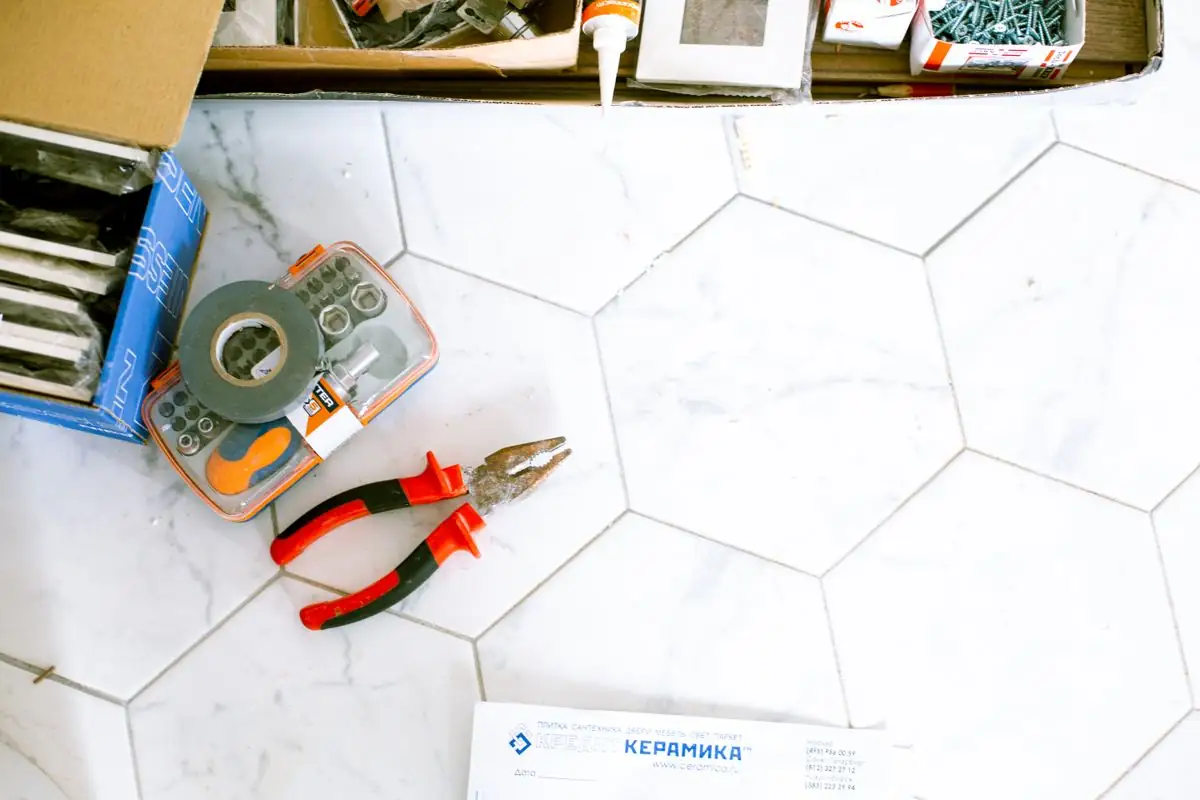
A selection of home renovation tools placed on a white tiled floor, ready for use.
- Leak traced with meter checks and moisture readings
- Walls and ceilings opened only where the pipe is
- Copper, PEX or ABS joined to match what is there
- Pressure-tested and left visible until it is proven dry
- Licensing details confirmed when you call
- Residential
- Commercial
- Markham & York Region
How the job runs
- Your water bill jumps with no change in habits.
- The meter dial moves when every tap is closed.
- Paint bubbles or baseboards swell near a bathroom.
- A musty smell in one closet or cabinet.
- A warm spot on a slab floor, which may mean a hot line is leaking below.
What's included on this job
What we open
As little as possible. We test first and open only the patch of wall the readings point to.
What we bring
Moisture meter, thermal camera, acoustic listening gear, and a pressure gauge on the main.
What we replace
The failed joint, pinholed copper, or a cracked fitting behind the wall.
How we prove it
Meter checked with every tap closed, then a gauge left on the line to show it holds pressure.
Signs you need this
- Water bill climbing with no change in use
- The meter dial moving with every tap off
- A warm spot on the basement floor
- Musty smell behind a vanity
Why leaks hide in Markham homes
Most houses here have their plumbing tucked inside drywall, under subfloors and behind finished basement walls. Pinhole leaks in copper, loose compression fittings behind toilets, and failed shower valve seals can drip for months before they show. Townhouses in Downtown Markham and Cornell add another twist: a stain on your ceiling may come from a neighbour's unit.
How we track it down
- We start at the meter. If the dial moves with everything off, water is going somewhere.
- We isolate sections by closing fixture valves one at a time.
- We use a moisture meter to map wet areas behind drywall without opening it.
- Thermal imaging helps spot hot water lines and damp patches.
- Only once we know where the leak is do we open the wall, and only as much as needed.
Common culprits
| Source | Clue |
|---|---|
| Toilet flapper | Meter moves slowly, tank refills on its own |
| Shower valve | Stain on ceiling below the bathroom |
| Supply line under sink | Damp cabinet floor |
| Pinhole in copper | Spot stain that grows slowly |
| Hose bib inside the wall | Damp basement wall below an outside tap |
What changes the cost
Leaks inside a slab, behind tile or in a shared wall take longer to pin down. Simple ones under a sink or behind a toilet are quick. We tell you what we expect before we begin.
From the van: Run the meter test yourself first: note the reading, use no water for two hours, then check again.
Water runs along joists and pipe before it shows. The stain marks the low spot, not the leak.
Call before it gets worse
Slow leaks feed mould and rot. The earlier we find the source, the smaller the patch you have to repair.